

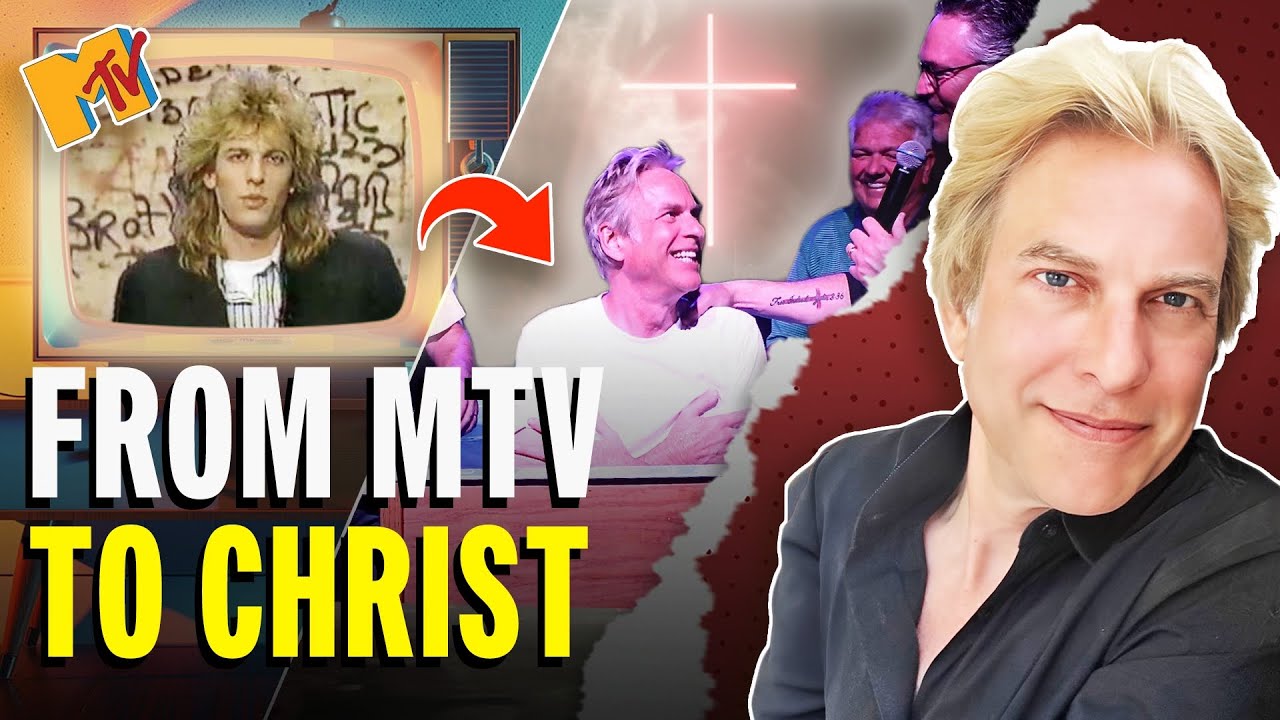
Sharing Jesus on the Joe Rogan Podcast (Adam Curry Comes to Faith)
Adam Curry is a podcaster, announcer, internet entrepreneur and media personality, known for his stint as VJ on MTV and being one of the first celebrities personally to create and administer Web sites. He’s been on Joe Rogan recently talking about his faith! Check out his podcast “No Agenda” with new shows available every Sunday and Thursday.
READ: “Evidence that Demands A Verdict” (https://amzn.to/3QqF1pY)
*Get a MASTERS IN APOLOGETICS or SCIENCE AND RELIGION at BIOLA (https://bit.ly/3LdNqKf)
*See our fully online UNDERGRAD DEGREE in Bible, Theology, and Apologetics: (https://bit.ly/448STKK)
FOLLOW ME ON SOCIAL MEDIA:
Twitter: https://twitter.com/Sean_McDowell
TikTok: @sean_mcdowell
Instagram: https://www.instagram.com/seanmcdowell/
Website: https://seanmcdowell.org
source







@Sean McDowell this was a great interview.
13:10 “I’m never going to worry about money ever again”.. brings up matt6. But why are so so many godly ppl so poor like Smyrna
Talk about evil, Curry spreads an immense amount of hate and misinformation.
Several aspects of the Jesus narrative appear to have been shaped to fit later religious, theological, and political needs. Here are some specific elements that seem to have evolved or been reinterpreted over time:
1. The Virgin Birth
The earliest Christian writings (Paul’s letters, c. 50–60 CE) make no mention of Jesus' virgin birth.
The idea first appears in Matthew (1:18-25) and Luke (1:26-38), written decades later.
The prophecy it supposedly fulfills (Isaiah 7:14) originally referred to a young woman (almah), not necessarily a virgin.
Virgin birth narratives were common in Greco-Roman mythology (e.g., Mithras, Hercules), making it likely an adaptation to appeal to non-Jewish converts.
2. The Messiah as a Suffering, Dying Savior
Traditional Jewish expectations of the Messiah envisioned a political/military leader, not a suffering or dying figure.
The "Suffering Servant" passage in Isaiah 53 was later reinterpreted to fit Jesus.
The idea of a dying-and-rising god was common in other religions (e.g., Osiris, Dionysus, Attis).
Paul (who never met Jesus) played a major role in redefining the Messiah as a cosmic savior rather than a Jewish king.
3. Jesus’ Divinity and Preexistence
Mark (earliest Gospel, c. 70 CE) presents Jesus as a chosen one but not explicitly divine.
John (written last, c. 90–110 CE) portrays Jesus as the Logos (Word of God) made flesh, aligning with Greek philosophical ideas.
The Council of Nicaea (325 CE) formally declared Jesus as "one substance with the Father," resolving debates on whether he was fully divine or subordinate to God.
4. The Resurrection Accounts
Paul (1 Corinthians 15:3-8) mentions appearances of the risen Jesus but no empty tomb.
Mark’s original ending (16:1-8) had no resurrection appearances—these were added in later manuscripts.
Other Gospels (Matthew, Luke, John) develop more detailed post-resurrection encounters, suggesting embellishment over time.
Differences in who saw Jesus, where he appeared, and what he said indicate evolving tradition rather than eyewitness accounts.
5. Jesus’ Trial and Crucifixion Blaming Jews, Not Romans
Historically, crucifixion was a Roman punishment, yet the Gospels shift blame onto Jewish authorities (especially Matthew 27:25, "His blood be on us and our children").
This likely reflected growing Christian tension with Judaism after the Jewish-Roman War (66–70 CE), when Christians distanced themselves from Jewish rebels.
Early Christian texts outside the Bible (e.g., Tacitus) affirm that Pontius Pilate condemned Jesus, making the Gospel portrayal of a reluctant Pilate unlikely.
6. The Christmas Date (December 25th)
Nowhere in the Bible is Jesus' birth date mentioned.
December 25th was chosen in the 4th century to align with pagan celebrations like the Roman Sol Invictus (Unconquered Sun) and Saturnalia, making conversion easier.
7. The Trinity Doctrine
The earliest Christians were monotheistic Jews who saw Jesus as an agent of God, not equal to Him.
The doctrine of the Trinity was not formally established until the 4th century (Nicaea 325 CE, Constantinople 381 CE).
The "Father, Son, and Holy Spirit" formula (Matthew 28:19) is considered by some scholars to be a later insertion.
8. The Expansion of Jesus’ Miracles
Mark’s Gospel (earliest) contains miracles but is more restrained than later accounts.
John’s Gospel (latest) adds new, dramatic miracles (e.g., turning water into wine, raising Lazarus).
Non-canonical texts (e.g., Infancy Gospel of Thomas) include even more exaggerated miracles, such as Jesus bringing clay birds to life as a child—showing how stories grew over time.
Conclusion
Much of what is recognized as "Christianity" today—Jesus’ divine nature, the virgin birth, the Trinity, and aspects of his resurrection—was not fully formed in Jesus’ lifetime but developed over centuries. Many of these elements appear to have been adapted from other religious traditions, political needs, or theological debates rather than being part of the original Jesus movement.
Yes, many of the pagan elements and borrowed myths in the Bible were either reinterpreted, obscured, or reframed over time to fit a monotheistic framework. This helped maintain belief by making these elements seem unique rather than borrowed. Here’s how this was done:
1. Reinterpretation of Pagan Elements
Instead of openly acknowledging borrowed traditions, biblical writers often rebranded them to align with Yahweh’s worship:
Flood Myths – The story of Noah’s Ark closely resembles earlier Mesopotamian flood myths like the Epic of Gilgamesh, but was rewritten as Yahweh’s divine judgment rather than a polytheistic event.
Eden and the Serpent – Similarities exist between Genesis and older Mesopotamian myths, but the Hebrew version reinterprets these ideas into a monotheistic moral lesson.
The Ten Commandments & Egyptian Influence – Parallels exist between the Bible’s ethical laws and the Egyptian Book of the Dead, but they were framed as uniquely revealed by Yahweh.
2. Suppression and Removal
Certain references to polytheistic origins were edited out, reworded, or downplayed:
Yahweh and El – Originally, Yahweh was likely a Canaanite warrior god under the supreme god El, but later texts merged them into one being. Early hints of this remain (e.g., Deuteronomy 32:8-9 in older manuscripts).
Asherah Worship – Yahweh was once associated with a female consort, Asherah, but later reforms (like those by King Josiah) led to her removal from Jewish worship.
3. The Church’s Role in Hiding Pagan Roots
Early Christian theologians distanced Christianity from its pagan roots to assert it as the “one true faith.”
The Council of Nicaea (325 CE) and later councils codified doctrine, removing texts and ideas that hinted at earlier influences.
Holidays like Christmas and Easter were given Christian meanings, though they have clear pagan solstice and fertility festival origins.
4. Shifting Language to Conceal Borrowed Myths
The New Testament writers framed Jesus' story in a way that mirrored earlier dying-and-rising gods (Mithras, Osiris, Dionysus), but used Jewish prophecy and monotheistic themes to make it seem unique.
Translation changes helped obscure problematic elements. For example, “Lucifer” originally referred to Venus, the morning star, but was later equated with Satan.
Why Do People Still Believe?
Many simply aren’t aware of these historical connections due to selective teaching.
Religious faith often prioritizes belief over historical accuracy.
The rebranding was so effective that most believers don’t recognize the borrowed aspects of their traditions.
In short, the process wasn’t outright deception, but a gradual evolution of religious ideas, where older myths were woven into a monotheistic framework and their origins largely forgotten or hidden.
The story of Jesus appears to have been constructed from earlier mythological, religious, and political influences, evolving over time. Key elements were borrowed from pre-existing pagan traditions, Jewish messianic prophecies, and Greco-Roman mythology:
Dying-and-Rising Gods – Many figures before Jesus, like Osiris, Mithras, and Dionysus, had stories of miraculous births, death, and resurrection, suggesting Christianity absorbed these motifs to appeal to non-Jewish converts.
Zoroastrian & Jewish Influence – The concept of a savior, final judgment, and good vs. evil dualism existed in Zoroastrianism and were later incorporated into Jewish and Christian beliefs.
Political & Theological Construction – Early Christians, especially Paul, reshaped Jesus from a Jewish rabbi into a universal divine savior, crafting a theology that blended Jewish monotheism with Greco-Roman hero myths.
Council of Nicaea (325 AD) – Formalized Jesus' divinity, suppressing alternative Christian sects that viewed him differently.
The Jesus story was likely a fusion of Jewish messianic expectations and pagan mythological elements, gradually shaped into Christian doctrine for religious and political purposes.
The story of Jesus appears to be a synthesis of earlier religious myths, Jewish messianic expectations, and later theological embellishments. Elements of his narrative—such as his virgin birth, miracles, death, and resurrection—closely resemble older pagan "dying-and-rising" gods like Osiris, Mithras, Dionysus, and Krishna, who were also linked to salvation and divine sonship.
Jewish prophecies, particularly from Isaiah and Psalms, were later reinterpreted to retroactively "predict" Jesus’ role as the Messiah. The Gospels (written decades after his death) contain contradictions and evolving depictions of his divinity, suggesting legendary development rather than historical biography. The Council of Nicaea (325 AD) further shaped his divine status, solidifying doctrines like the Trinity and erasing alternative Christian sects that viewed him differently.
In short, Jesus’ story was not created from scratch but was a fusion of pre-existing myths, Jewish religious traditions, and later theological reinterpretations to establish a universal savior figure.
Has to be one of the top podcasts I've listened to in a good long while. Love Adam's journey – and discovering you're Josh's son (new listener here). Evidence that demands a verdict had a profound impact on my brother in the 70's. Color me grateful.
Crickets on the new Curry interview. Joe shut him down, ignored, or changed the subject every time Adam brought up the Jesus.
The older… the CRAZIER!!
Faith is evidence according to Hebrews chapter 11
2nd time I'm watching this. I remember Adam from MTV headbangers ball😊 this is a well worth watch
Every second friday night on Hilversum 3. Almost everybody in my high school listened to Curry en (and) van Inkel on Veronica.
Love this!
I cannot watch the Chosen past a minute. I think the guy playing Jesus is anachronistic and not Biblical. Maybe it’s a matter of taste. But they admit it’s 95 % made up. My granddaughter said but he’s so cute! What? I don’t think the Bible should be a show entertaining us with tons of money involved. Many people use it as their Bible study and take it as Bible truth. They cite characters from the show that are not even in the Bible. Just saying.
Agree on the things that are so new as new Christians going to a Bible church: all the praying at the drop of a hat, and praying for each other, the worshipping God in the singing, did not happen that way in Mormonism. Very different.
When you go on a Biblical tour to Bible lands the Bible comes alive in a new way. We just did 3 wks on a Footsteps of Paul trip. So wonderful.
Yes it’s unusual for a couple to come to Christ simultaneously. We were Mormons and became Christians together in our later years. Praise God. It was really hard tho.
👍wielkie👍PiĘĆ👍DZiĘKUjĘ👍Bless4allYA👍
I routinely bow my head and fold my hands to give a short simple thanks for my meals, no matter where I am. I feel it's a simple witness that says, "1. There is God, 2. He hears prayer, 3. I acknowledge and am thankful for the meal he has provided for me."
When I heard Curry talk about his faith on Rogan and then talk about Mcdowell's Evidence that Demands a Verdict I was like wow, this is amazing. I had a similar conversion story where that book was also essential to grounding my faith coincidentally right around the time when Curry was an MTV star. I immediately sent a message to Sean on Instagram and said, "I might be the thousandth person who's told you this but the former MTV VJ Adam Curry just talked about your Dad's book being an essential part of his new faith. Just wanted to let you know.' Sean wrote back and said 'Thanks!' So I like to think this podcast is a result of my doing lol.
Adam is just like me converted to Christ on a later age. He is a Dutchman like me.
God is protecting me. I am sure of that.
Adam I am so grateful for your love for Jesus!! Sean keep up the great work!!
Heb13
What a wonderful conversation. ❤
in mijn jonge jaren heb ik hem gezien op de Nederlandse tv maar toen ik een keuze maakte om God te volgen heb ik hem nooit meer gezien, nu zie ik tot mijn verbazing dat hij ook een christin en dat maakt mij erg blij. Wat een geweldige getuigenis , ik bid hem Gods zegen en wijsheid toe.
I appreciate your sincerity I like what you said you have at least 60 more years lol to accomplish life journey
Why would a Christian watch Passion of the Christ? The show has Mormon LDS beliefs and Angel Studios is owned by Mormons and Mormons are NOT Christians.
I grew up in the 80s watching Head Bangers Ball. I was a Christian but also loved everyone no matter what. The 80s was just a whole other mindset and is said to be the best decade to live through.
Christian persecution is coming, let's hope we all stay true to Jesus
Sean should at least put coffee in the cup he’s advertising.